5 Things the Trump Meme Coin Fight Reveals About Crypto Scam Risk
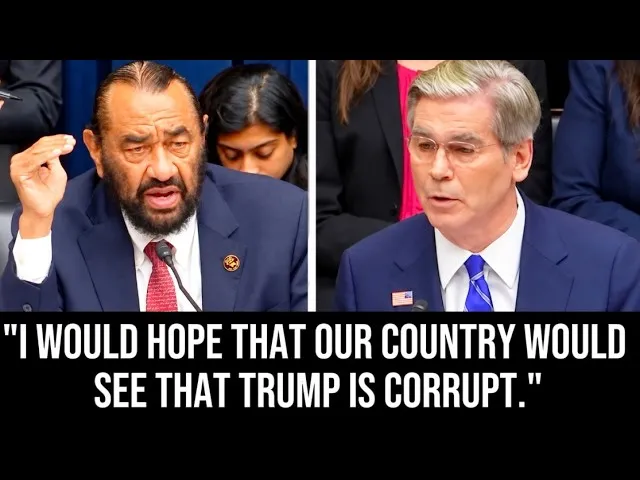
Video: WHOA: Al Green GRILLS Bessent over Trump's meme coin “scam”
Need articles like this for your video? They help promote it on YouTube and Google — order them in the Telegram bot @sat_sit_bot. It writes articles around your video, embeds the video and publishes them on popular niche websites (no ads). Try it free: 50 articles on us.
· based on the channel Daniel Reed
Key takeaways
- Senator Al Green questioned Treasury Secretary Scott Bessent about whether the Trump meme coin amounts to a scam or a way to sell access to the presidency.
- US law taxes crypto as property, so every swap of one coin for another is a taxable disposal even when no dollars are withdrawn.
- Meme coins have no cash flow or claim on assets; price depends entirely on whether a later buyer pays more than the last one.
- In past cycles, political and celebrity tokens have lost most of their value within weeks of launch once early buyers exited.
- Crypto tokens that also function as securities fall under SEC and CFTC rules, but meme coins are usually marketed to avoid those labels.
A meme coin is a crypto token with no cash flow, no claim on assets and no business behind it, whose price depends only on whether someone else will pay more later. That definition sits at the centre of a public dispute over Trump's own token, where Senator Al Green pressed Treasury Secretary Scott Bessent to say whether the president's coin amounts to a scam. The short answer: the token is not illegal in itself, but its structure concentrates risk on the last buyers in line, and the political setting makes the conflict-of-interest questions harder to separate from the trading questions.
What the Al Green and Bessent exchange actually covered
Al Green, a Democratic congressman from Texas who has repeatedly pushed for scrutiny of the president's business dealings, used a hearing to ask Bessent directly whether a sitting president selling a token to supporters was acceptable. Bessent, a hedge fund investor before joining the administration, defended the wider crypto agenda and treated the token as a private matter rather than a policy question. The exchange never produced a definition of "scam", which is the crux: a meme coin can be honestly launched, honestly traded and still destroy most of the money that enters it.
How a meme coin loses money for most buyers
A meme coin is a pure greater-fool asset. The mechanics are simple and worth spelling out, because the same pattern repeats with every political and celebrity token.
- Insiders and early wallets buy at launch prices measured in fractions of a cent.
- Publicity, in this case presidential branding, pulls in retail buyers who push the price up.
- Early holders sell into that demand; the supply is large and the liquidity thin.
- Late buyers hold tokens nobody wants at their entry price, and the price collapses toward zero.
Nothing in that sequence requires fraud. It requires only that the number of new buyers eventually stops growing. Trump-linked tokens have followed this arc before: a launch spike, a wave of coverage, then a long decline that leaves the majority of holders underwater while a small number of wallets take the profit.
The tax trap that surprises meme coin traders
US tax law treats crypto as property, not currency, and that single rule turns active meme coin trading into an accounting problem. Every swap of one token for another is a taxable disposal, even if the trader never converts to dollars. A trader who flips a token into a stablecoin and back fifty times in a month has fifty reportable events, each with its own gain or loss and cost basis.
Losses are only useful against gains, and the wash-sale rule that lets stock investors rebuy a losing position has not historically applied to crypto, though legislative proposals have tried to change that. The practical result is that many small traders owe tax on gains they already gave back, while the insiders who sold at the top report large profits. Anyone treating a meme coin as a lottery ticket should keep a transaction log from day one.
Why "access" is the real product, not the token
A common argument in the debate is that buyers are not really buying a coin at all. They are buying proximity: a seat at a dinner, a mention, a photograph, a perceived line to power. That framing matters because it moves the token closer to the legal definition of a security, where a purchase is an investment in a common enterprise with an expectation of profit from someone else's efforts.
US regulators have generally let meme coins sit outside securities law by stressing that they are collectibles with no promise of return. The moment marketing shifts toward access, influence or future value, that safe harbour weakens. The same logic explains why exchange listings and promotional posts by public figures draw scrutiny: promotion of an asset by someone who can move its price is a conflict, whether or not a rule is broken.
The questions traders keep asking about meme coins
The doubts that surface in every discussion of political tokens fall into a few recurring buckets. Is it a Ponzi scheme? Strictly, no: a Ponzi pays old investors with new money through a central operator, while a meme coin is an open market where the transfer happens on a public ledger. Is it a pyramid? Closer in spirit, because returns depend on recruiting later buyers, but there is no formal downline or recruitment payout.
Is it money laundering? Large, liquid, thinly regulated tokens are attractive for moving value, and that concern is legitimate, but the overwhelming majority of retail buyers are simply speculating. Is it foolish? Buyers of any asset with no fundamentals should assume the downside is total. The honest summary is that meme coins are legal, transparent in their mechanics, and structurally designed to transfer wealth from the crowd to the earliest wallets.
What a buyer should check before touching a political token
Before buying any meme coin, verify four things. First, the holder distribution: if a handful of wallets control a large share of supply, those wallets set the exit price. Second, liquidity: check whether the pool is locked and how deep it is, since thin liquidity means a modest sell order can halve the price. Third, the contract: mint authority, freeze authority and hidden transfer taxes are common in new launches. Fourth, your own exit plan, written down before entry, because the token will not tell you when to leave.
Position sizing matters more here than in almost any other market. A token with no earnings, no collateral and no legal claim should be treated as money that can go to zero, not as a savings vehicle. Traders who treat political tokens as entertainment with a capped budget survive the cycle; those who average down on conviction usually do not.
The bottom line on meme coin risk
The Al Green and Bessent exchange did not settle whether Trump's token is a scam, and it probably cannot be settled in a hearing, because the token's danger comes from its design rather than a single act of deception. What the dispute does show is that political branding can pull enormous sums into an asset with no fundamentals, and that regulators, tax authorities and exchanges are all still deciding how to treat the result. Daniel Reed's breakdown of the hearing captures how quickly the argument moves from policy to personal enrichment. For traders, the lesson is unchanged: in a market where the only exit is a later buyer, the crowd is the product, and the crowd is usually last.
FAQ
Is a meme coin the same as a Ponzi scheme?
No. A Ponzi scheme pools money with a central operator who pays earlier investors from later deposits, which is fraud. A meme coin trades on an open market where the ledger is public; the losses come from buying at a price later buyers refuse to match, not from a hidden operator.
Do I owe tax if I only swap one meme coin for another?
Yes, under US rules crypto is property, so a swap is a taxable disposal at fair market value. You report gain or loss against your cost basis even if no dollars ever reach your bank account, which is why a full transaction log is essential.
Why do people buy tokens with no fundamentals?
Buyers are often chasing access, attention or a fast gain rather than cash flow. Some want proximity to a public figure, others simply expect a later buyer to pay more, and that expectation is exactly what makes the exit crowded when sentiment turns.
What should I check before buying a political meme coin?
Look at holder concentration, liquidity depth and whether the pool is locked, then read the contract for mint or freeze authority and transfer taxes. Decide your exit price and maximum position size in advance, and assume the entire amount can go to zero.
Source: WHOA: Al Green GRILLS Bessent over Trump's meme coin “scam” · Markdown version